
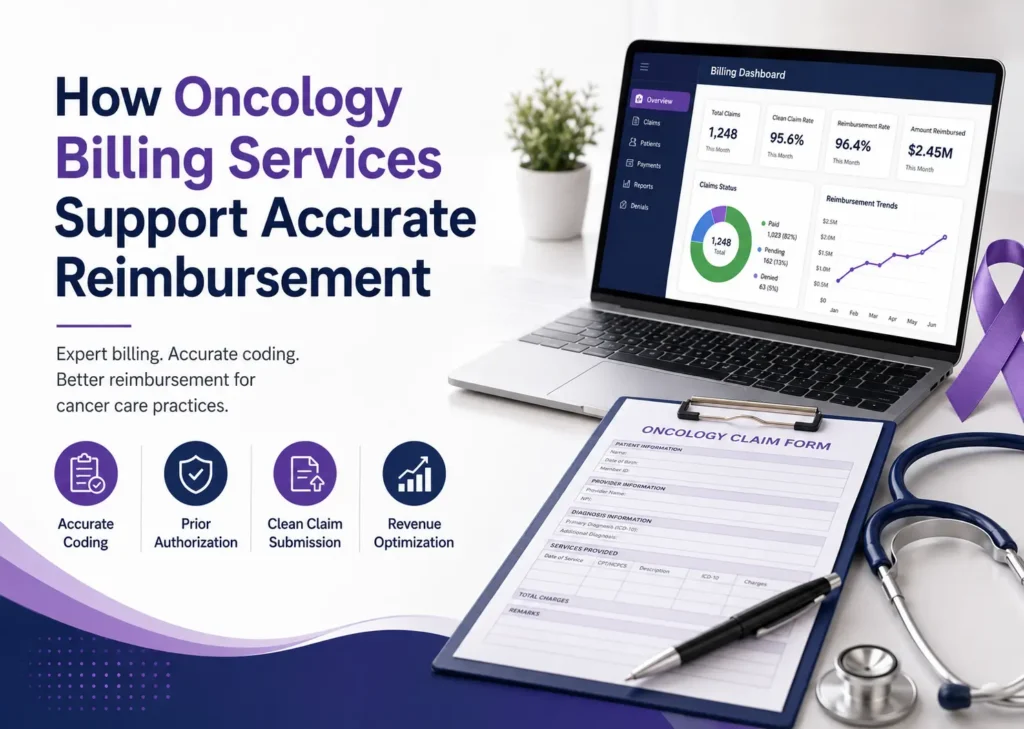
How Oncology Billing Services Support Accurate Reimbursement
Oncology billing services help cancer care practices manage complex billing workflows, accurate coding, treatment documentation, prior authorization, and reimbursement follow up. Oncology billing is more detailed than many other specialties because it often includes chemotherapy, infusion therapy, radiation oncology, oncology drugs, treatment cycles, drug units, and payer specific rules.
For oncology practices, accurate reimbursement depends on more than submitting claims. Every service must be supported by correct codes, clear documentation, verified benefits, approved authorizations, and complete treatment details. If any part of the billing process is incomplete, the practice may face payment delays, underpayments, or extra administrative work.
A strong oncology billing process helps cancer care providers focus on patient care while keeping the financial side of the practice organized, accurate, and easier to manage.
Why Oncology Billing Is More Complex Than General Medical Billing
Oncology billing is complex because cancer care often involves multiple services during a single treatment plan. A patient may need office visits, diagnostic testing, chemotherapy, infusion therapy, injections, medication management, radiation therapy, lab work, imaging coordination, and ongoing follow up.
Each service may have different billing requirements. Chemotherapy billing depends on the drug administered, dosage, units, wastage, administration route, and medical necessity. Infusion billing may depend on infusion time, medication type, start and stop times, and whether the service was initial, sequential, or concurrent. Radiation oncology billing may require accurate documentation for treatment planning, delivery, imaging guidance, and follow up care.
Because oncology care can involve high cost medications and detailed payer policies, even small billing mistakes can create reimbursement issues. This is why oncology medical billing services need specialty knowledge, careful claim review, and consistent revenue cycle follow up.
Key Areas That Affect Oncology Reimbursement
Oncology reimbursement depends on several billing, coding, authorization, and documentation factors. A practice must make sure each part of the billing workflow is accurate before claims are submitted.
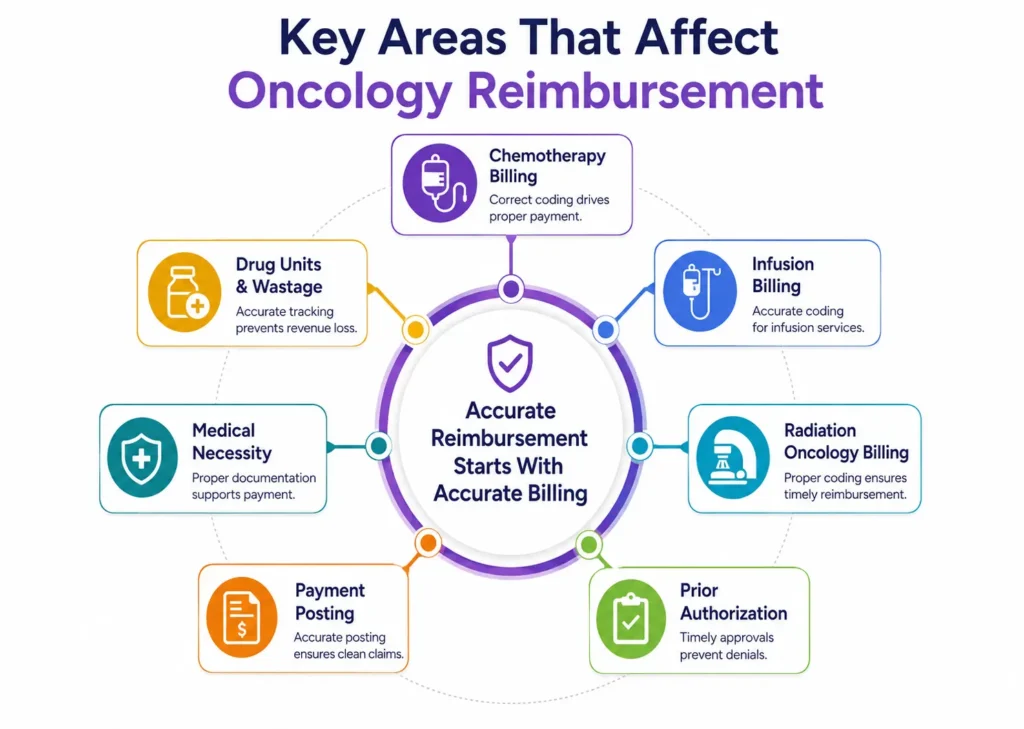
These areas are important because oncology billing involves high value services and detailed payer requirements. A small issue in coding, documentation, or authorization can affect the payment outcome.
Denial Reason | Why It Happens |
|---|---|
Chemotherapy billing | Requires accurate drug codes, dosage, units, administration details, and documentation |
Infusion billing | Depends on infusion time, medication type, route, and service sequence |
Radiation oncology billing | Requires accurate treatment planning, delivery, and procedure documentation |
Prior authorization | Many oncology treatments require payer approval before care is provided |
Drug units and wastage | Incorrect drug units or missing wastage details can affect reimbursement accuracy |
Medical necessity | Documentation must clearly support why treatment was needed |
Eligibility verification | Helps confirm coverage, benefits, patient responsibility, and payer rules |
Payment posting | Helps identify underpayments, adjustments, and payer issues |
A/R follow up | Helps track unpaid claims and reduce aging balances |
7 Way Oncology Billing Services Improve Revenue Accuracy
Professional oncology billing services improve revenue accuracy by managing each stage of the billing process with careful review and specialty focused support. The goal is to help oncology practices submit accurate claims, reduce avoidable payment delays, and improve financial visibility.
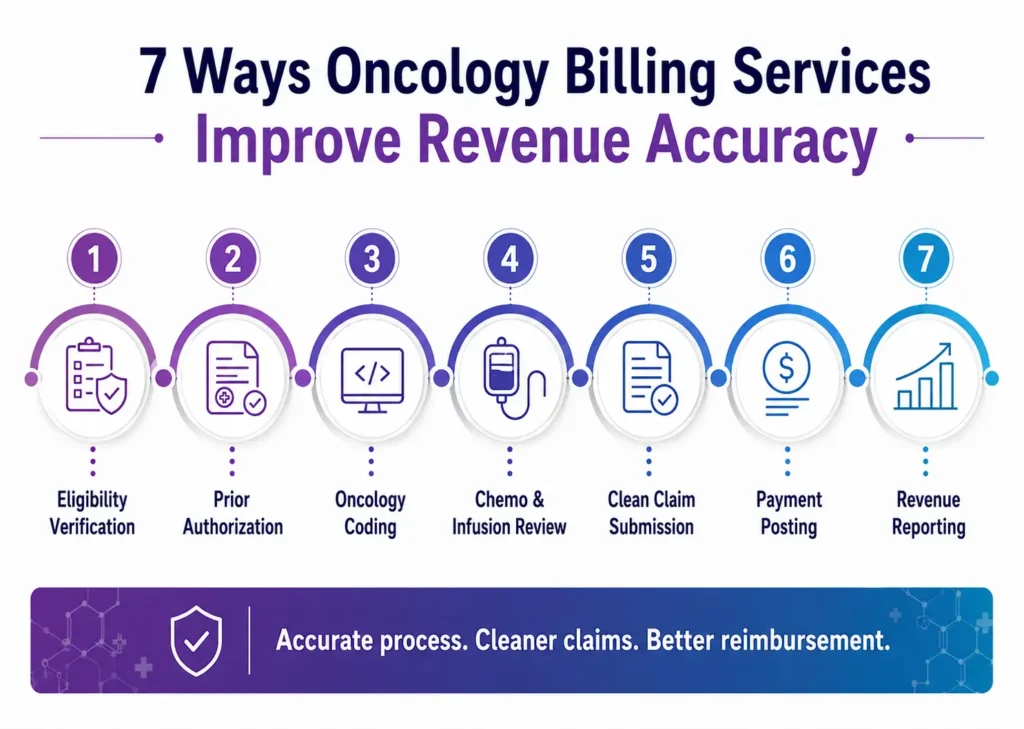
1. Insurance Eligibility Verification
Eligibility verification should be completed before treatment begins. The billing team should confirm active coverage, oncology benefits, specialist coverage, patient responsibility, referral requirements, and payer rules.
This step is especially important for oncology practices because treatment plans may include expensive medications, repeat visits, and multiple services. Verifying benefits early helps the practice understand coverage and reduces payment uncertainty.
2. Prior Authorization for Oncology Treatments
Many oncology treatments require prior authorization before services are provided. This may include chemotherapy drugs, infusion therapy, radiation therapy, advanced imaging, genetic testing, or specialty medications.
A strong oncology billing process tracks authorization requirements, approval dates, covered services, authorized units, and expiration dates. This helps the practice avoid billing issues when treatment continues over multiple visits or treatment cycles.
3. Accurate Oncology Billing and Coding
Oncology billing and coding requires detailed knowledge of CPT codes, ICD 10 codes, HCPCS drug codes, modifiers, treatment documentation, and payer specific rules. The claim must match the service performed and the documentation in the medical record.
For example, chemotherapy billing may require accurate drug codes and units. Infusion billing may require time based documentation. Radiation oncology billing may require treatment planning and delivery details. Accurate coding helps protect reimbursement and reduce payer questions.
4. Chemotherapy and Infusion Billing Review
Chemotherapy billing and infusion billing need extra attention because they involve treatment details that directly affect reimbursement. The billing team should review drug name, dosage, units, administration method, infusion time, start and stop times, and supporting documentation.
When these details are not reviewed carefully, the practice may experience payment delays, underpayments, or payer requests for additional information. A specialty billing team can help make sure chemotherapy and infusion claims are submitted with the right details.
5. Clean Claim Submission
Clean claim submission means the claim is complete, accurate, and ready for payer review. Before submission, the billing team should check patient information, provider details, insurance data, authorization status, CPT codes, ICD 10 codes, HCPCS codes, modifiers, drug units, and documentation.
Clean claims help oncology practices improve reimbursement speed and reduce time spent correcting claim issues after submission.
6. Payment Posting and Underpayment Review
Payment posting helps the practice understand what was paid, what was adjusted, what was denied, and what remains as patient responsibility. In oncology billing, this step is important because payers may apply different payment rules for high cost drugs, infusion services, and treatment related procedures.
The billing team should review payments against expected allowed amounts. If a claim is underpaid, the issue should be identified and followed up with the payer.
7. Oncology Revenue Cycle Reporting
Oncology revenue cycle management should include regular reporting on claim status, payment trends, underpayments, aging A/R, payer delays, and reimbursement performance.
Reporting gives oncology practices better visibility into their financial process. It also helps identify where revenue is being delayed, where payer follow up is needed, and where billing workflows can be improved.
Why Documentation Matters in Oncology Billing
Documentation is one of the most important parts of oncology billing. It supports medical necessity, treatment details, drug administration, and payer review.
For oncology claims, documentation should clearly show the patient diagnosis, treatment plan, drug name, dosage, units, route of administration, infusion start and stop times, treatment cycle, provider notes, and follow up plan.
Documentation Area | Why It Matters |
|---|---|
Patient diagnosis | Supports the reason for treatment |
Treatment plan | Shows the care goals and clinical direction |
Drug name and dosage | Supports services provided on each date |
Units administered | Helps support correct CPT code selection |
Infusion start and stop times | Shows what treatment was performed |
Route of administration | Supports continued medical necessity |
Medical necessity | Completes the clinical record |
Provider signature | Supports ongoing care and payer review |
Follow up plan | Supports ongoing treatment and care coordination |
Strong documentation helps oncology practices support accurate coding, cleaner claims, and better reimbursement tracking. It also helps when payers request additional information.
Benefits of Outsourcing Oncology Billing Services
Many oncology practices manage billing in house, but oncology billing can place heavy pressure on internal teams. Staff may need to manage eligibility checks, prior authorizations, drug billing, infusion coding, payment posting, payer follow ups, and patient billing questions.
Outsourcing oncology billing services can help reduce that workload and improve billing accuracy.
A professional oncology billing partner can help with:
Outsourced oncology medical billing services are especially useful for cancer care practices facing complex payer rules, high value treatments, billing backlogs, underpayment concerns, or limited billing staff.
With the right billing support, oncology practices can improve reimbursement accuracy, reduce administrative pressure, and focus more on patient care.
Final Thoughts
Oncology billing requires accuracy, consistency, and specialty focused billing knowledge. From eligibility verification and prior authorization to chemotherapy billing, infusion billing, coding, payment posting, and A/R follow up, every step affects reimbursement.
Professional oncology billing services help cancer care practices manage complex claims, improve documentation accuracy, protect reimbursement, and maintain a stronger revenue cycle.
If your oncology practice is dealing with billing complexity, reimbursement delays, underpayments, or administrative workload, Texas Medical Billing can help support a smoother and more accurate billing process.
Need Help Managing Oncology Billing Reimbursement?
Texas Medical Billing helps oncology practices manage coding, prior authorization, infusion billing, chemotherapy billing, payment posting, and revenue cycle follow up with reliable medical billing support.